Elevate Your Space with the Perfect Marble Table
Choosing marble tables is one of the easiest ways to make a room feel instantly more grown up, calm and stylish. A good marble top can lift a compact city flat, a narrow terrace or a big open-plan kitchen, without needing lots of extra decor. It brings texture, movement and a soft natural sheen that works in both bright and grey British light.
Marble is loved because it is strong, long-lasting and completely unique. No two slabs are the same, which gives your dining or living space a quiet, designer feel. In this guide, we will look at how to pick the right shape and style, which finishes and colours work best in UK homes and simple care tips so your table stays beautiful through busy weekdays and long weekend dinners.
Matching Marble Table Styles to Your Home
The shape and base of a marble table change how a room feels. A quick way to start is to think about how you use the space most days.
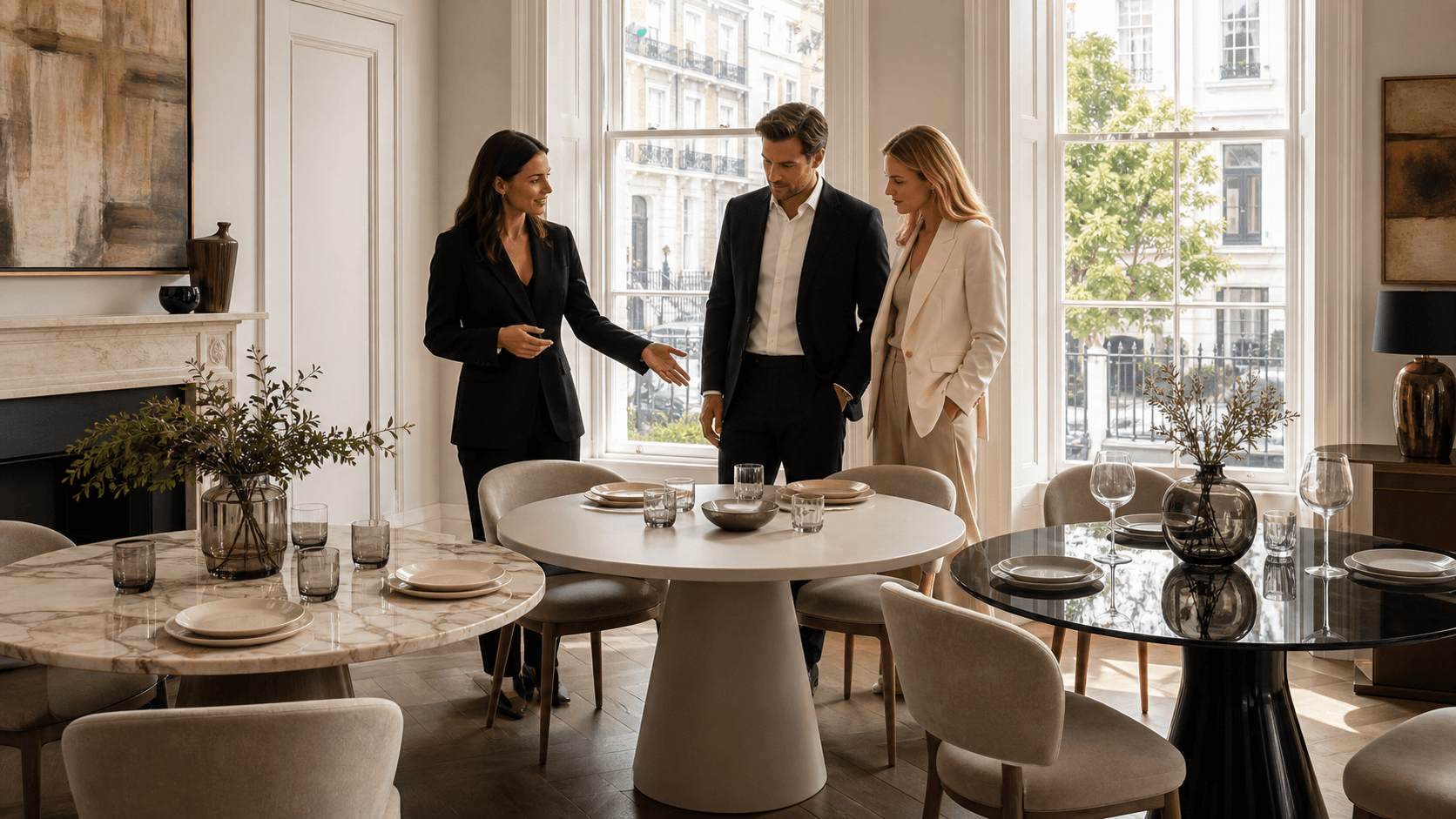
Round marble tables are great if you want a cosy, social feel:
- Perfect for chatting because everyone can see each other
- Easy to move around in smaller dining corners
- Softer edges, which many families prefer
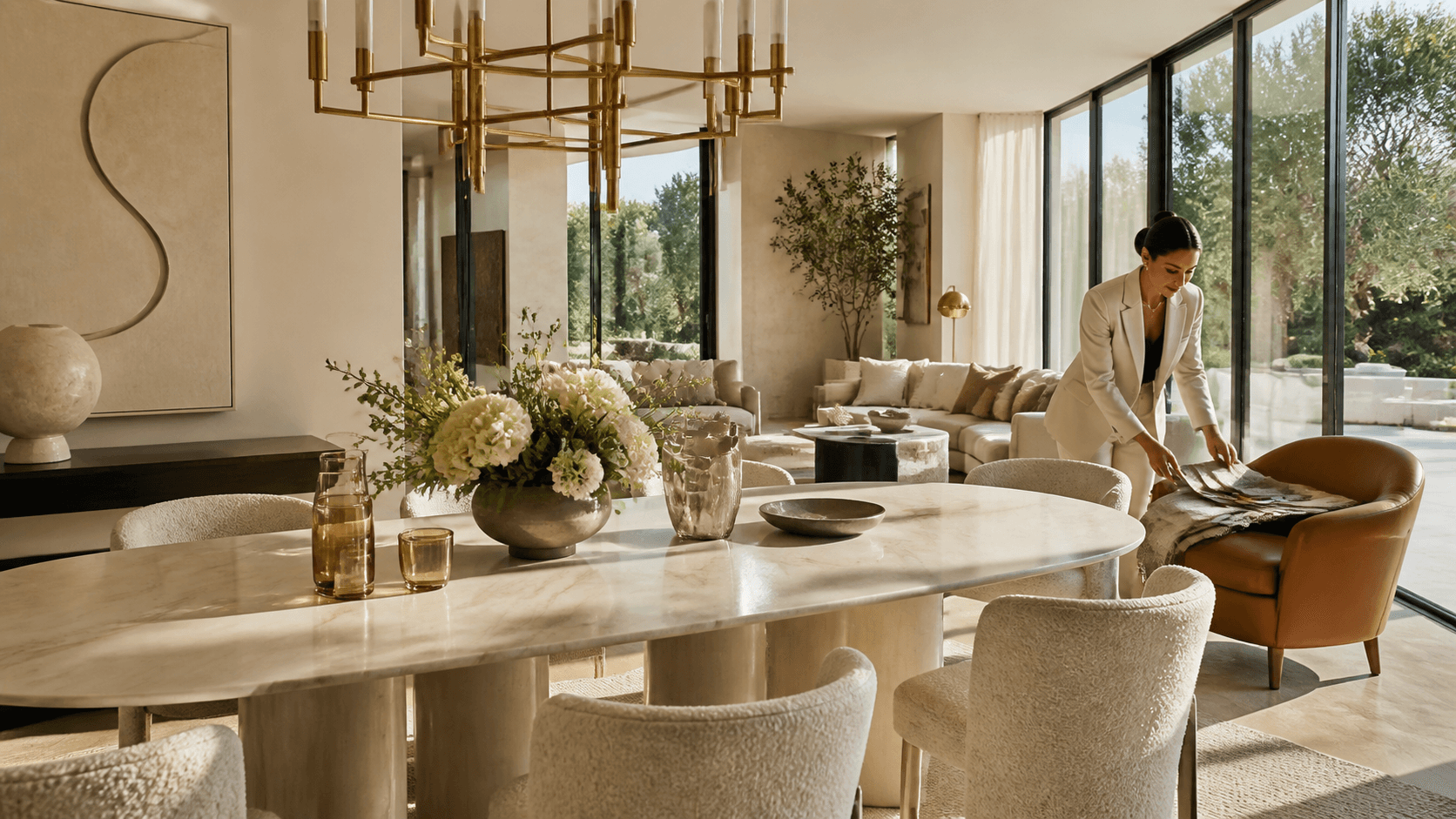
Rectangular or oval tables feel a bit more formal and work well if you host often:
- Better for seating more people along the sides
- Sit neatly in long rooms or against a wall
- Great for open-plan kitchens where you want a clear dining zone
The base matters as much as the top. A central pedestal base feels light and airy, and helps with squeezing in extra chairs. Four-leg designs feel more classic and sturdy, and can suit period homes with original features.
Think about your interior style too:
- Modern Scandi: lighter marble, simple lines, slim black or white metal legs, maybe pale wood
- Contemporary luxe: bold veining, polished finish, brushed brass or dark metal bases
- Industrial: darker or grey marble, black metal bases, clean shapes
- Classic London period homes: cream or soft white marble with turned wood or more traditional leg shapes
For layout in UK homes, a few quick checks help a lot:
- In small flats, leave enough space to pull out chairs easily, usually at least the width of a chair behind each seat
- In long Victorian terraces, a slim rectangular table that runs with the room works better than a wide, chunky one
- In open-plan family kitchens, think about push-back chairs, pets and kids moving around and sight lines to the TV or garden
Finishes and Colours That Work in British Homes
The finish of your marble table changes how it looks, how it feels and how it behaves in everyday life.
Common finishes include:
- Polished: glossy, reflective, shows off veining and feels very luxurious, but water marks and fingerprints can show more
- Honed: smooth but matt, softer look, great for diffused British light, small marks often blend in better
- Brushed: gently textured, slightly rustic, hides everyday wear nicely, feels relaxed and tactile
Polished tops bounce light around a room, which is lovely in darker spaces, but you may find yourself wiping more often. Honed and brushed finishes feel calmer and can suit busy households that do not want to think about every little mark.
Colour also plays a big part:
- Classic white marble: fresh and bright, works well with white walls, grey sofas and pale floors
- Warm creams and beiges: softer, great with wood floors and warmer paint tones
- Dramatic black or charcoal: bold and chic, ideal as a focal point, especially with lighter walls
- Grey marbles: very forgiving for daily use, mix easily with both cool and warm palettes
Because we live with long summer evenings and then fairly dark autumn and winter months, it is worth thinking about how the table feels across all seasons. Light marbles help keep things airy when the sun is still up late, yet they can still feel snug in winter once you add candles or a simple runner. Dark marbles give depth and drama, then feel cosy and intimate when the nights draw in.
Practical Tips for Living with Marble Tables
Marble is a natural stone, so it behaves differently from ceramic or glass. It is porous, so liquids can soak in, and it can etch if something acidic sits on the surface. Having realistic expectations makes a huge difference, because then every small mark feels like part of the story, not a disaster.
To keep things under control, simple habits are enough:
- Use coasters for drinks, especially wine, juice and fizzy drinks
- Use placemats under plates and bowls at everyday meals
- Wipe spills quite quickly, especially tea, coffee, curry and tomato sauces
- Use heat-proof trivets under hot pans and roasting dishes
Most marble tables benefit from being sealed and then resealed from time to time. A good sealant helps slow down stains and gives you more time to catch a spill. For regular cleaning, a soft cloth with warm water and a mild, stone-safe cleaner is usually all you need. A quick weekly wipe and a more careful clean when you have had guests will keep the surface looking smooth and calm.
Comparing Marble Tables with Ceramic Alternatives
Ceramic dining tables are a strong alternative if you love the look of marble but want something very low fuss. Many ceramic tops are designed to copy the movement and veining of marble, yet they are non-porous and very hard-wearing.
In everyday UK life that can mean:
- Less worry about staining from red wine, curry or kids paints
- High resistance to scratches from cutlery and serving dishes
- Easy cleaning with standard gentle cleaners
Marble, on the other hand, gives you:
- One-of-a-kind natural veining and depth
- A cool, tactile feel that many people prefer
- A quiet, premium presence in the room
If you have a busy home with pets, young children or frequent big gatherings, a ceramic marble-effect table might fit your lifestyle better. If you want maximum character and you are happy to follow some simple care habits, a true marble table can become the heart of your space.
How to Choose and Care with Confidence
A few clear steps make choosing feel much easier. Start by measuring your room, including space for chairs to move, and think honestly about how many people you seat most weeks. Decide whether round, square, oval or rectangular works best with your layout and how you use the space.
Then look at:
- Which finish suits your tolerance for marks and cleaning
- Which colour and veining work with your floors, walls and cabinets
- How the table will look on a bright summer evening and on a dark winter night
Marble tables do not need museum rules. With coasters, placemats and quick wipes, they settle into everyday life very happily. At Casa-Interiors, we love helping people choose between marble and ceramic dining tables and matching shapes, finishes and bases to real homes all across the UK, from compact kitchens to generous open-plan rooms. When you treat your table as something to be used and enjoyed, it will reward you with years of style, character and easy elegance.
Transform Your Dining Space With Timeless Elegance Today
Explore our curated collection of marble tables to bring lasting style and practicality to your home. At Casa-Interiors, we carefully select every piece so you can feel confident in the quality and finish. If you would like tailored advice on size, shape or finishes, simply contact us. Let us help you create a dining space you will enjoy every day.